Bee Package Installation
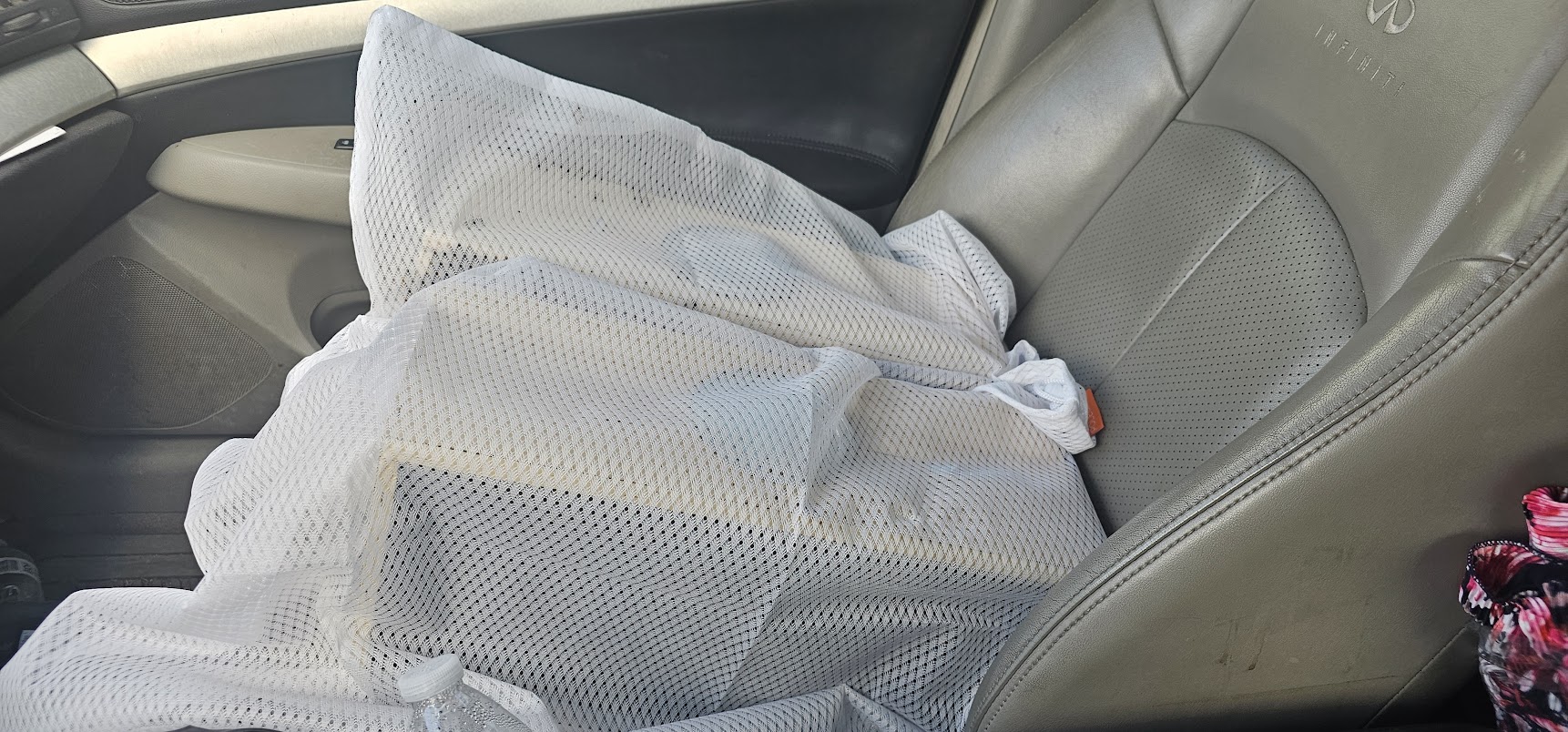
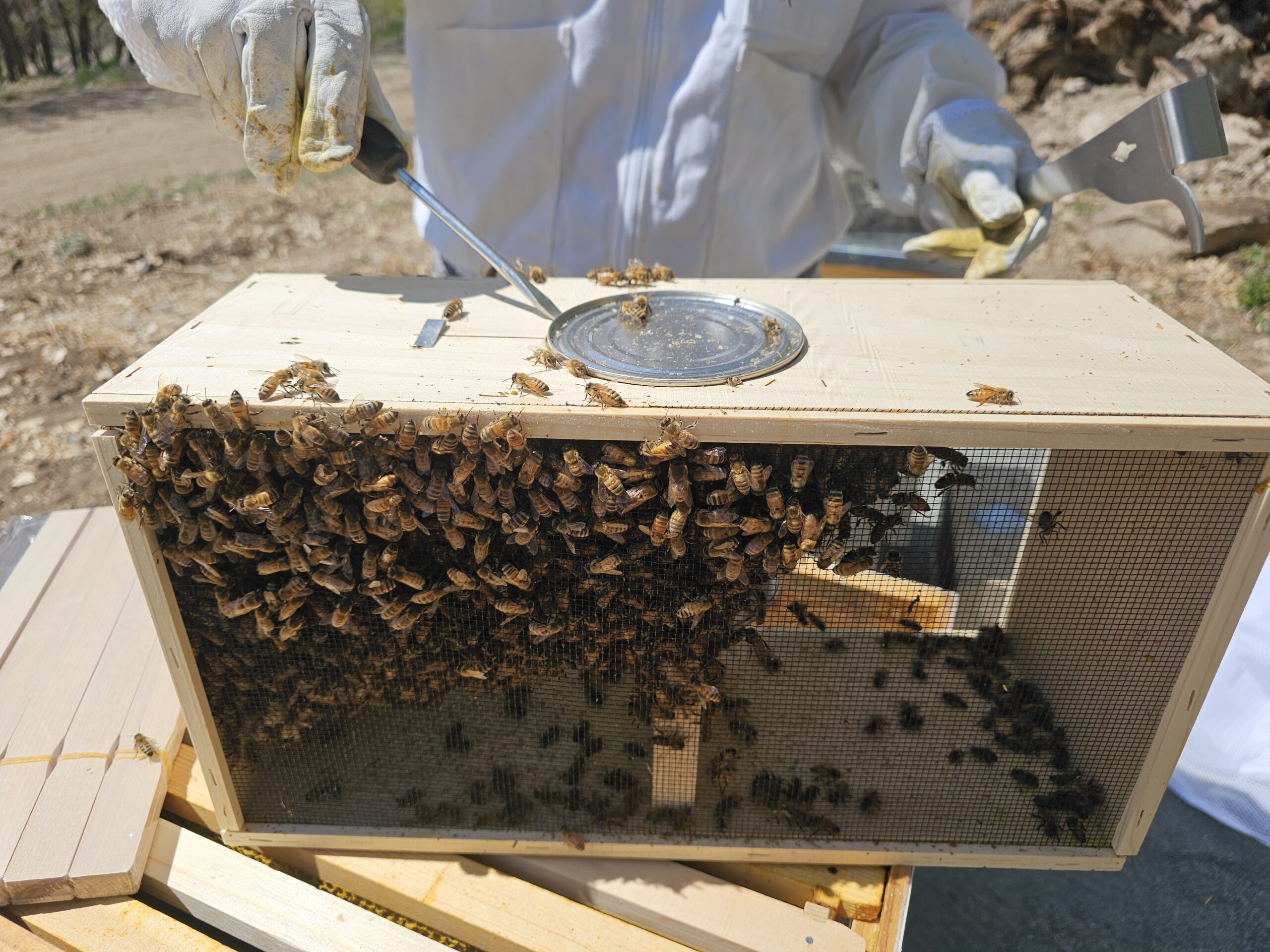
Today, I picked up my two bee packages. This year, I used two laundry bags with small holes in it to transport them in my car, which helped avoid the hassle of brushing off any stray bees clinging to the outside. Additionally, this setup provided an extra layer of safety; in the unlikely event of an accident on the drive home, I wouldn’t have to stress about the bees escaping from the package.
This year, I bought two hives because I’ve discovered that it’s beneficial to maintain at least two hives simultaneously for comparison purposes. I didn’t have that advantage last year.
Picking them up was a smooth experience once again. I had a specific time frame for collection, so I arrived right in the middle based on the starting letter of their last names. I waited in line for just about two minutes before reaching the front. It took an additional couple of minutes for them to pack everything into a bag and send us off. Fortunately, the beekeeper I relied on was present to check all the packages, reassuring me that my bees were in excellent condition.
Fortunately the weather cooperated to get them installed in their hives soon after getting them home. The temperature hovered around the mid 40s to low 50s during the process, and with rain forecasted for later, it was important to complete the installation as soon as possible.
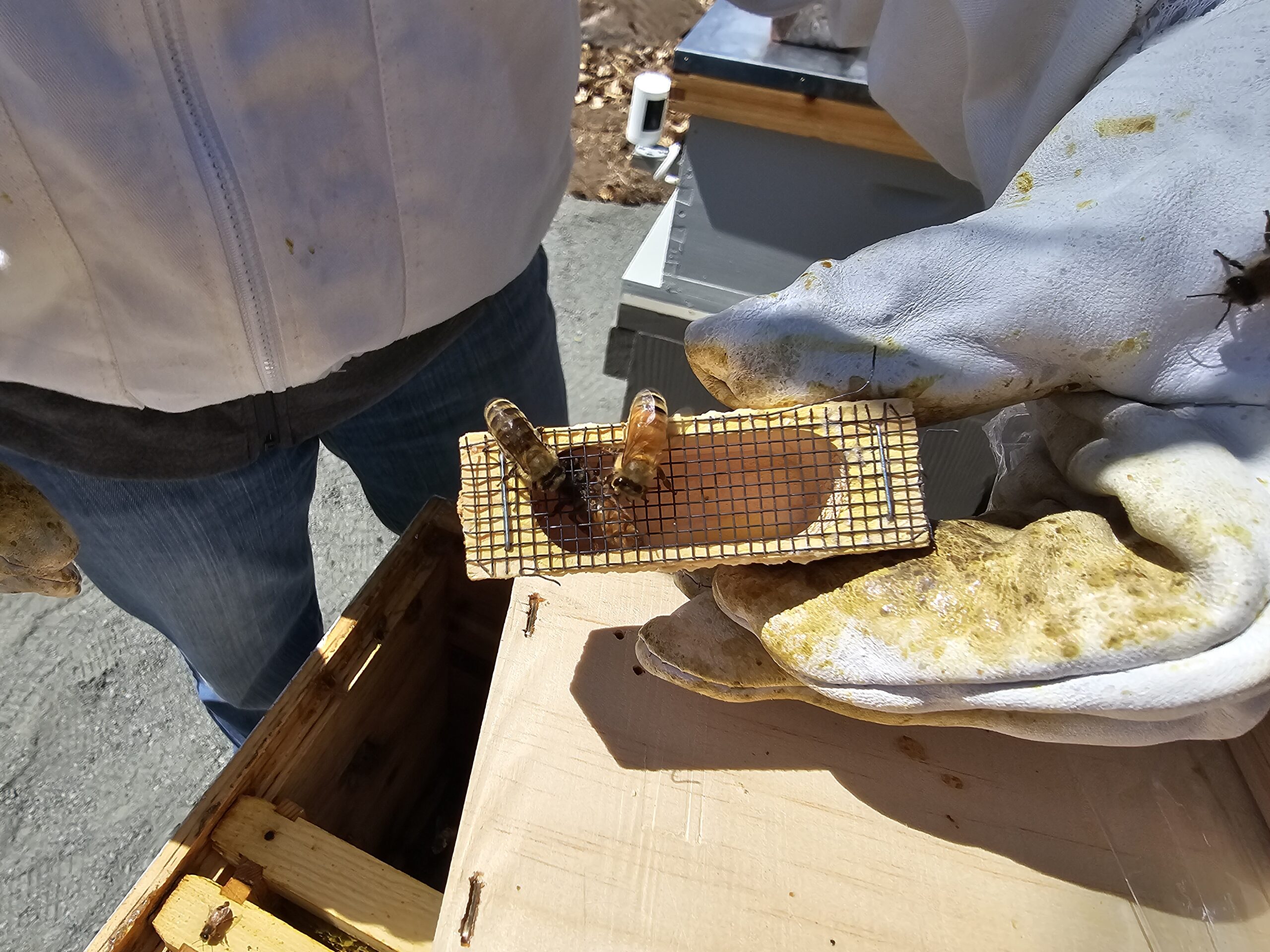
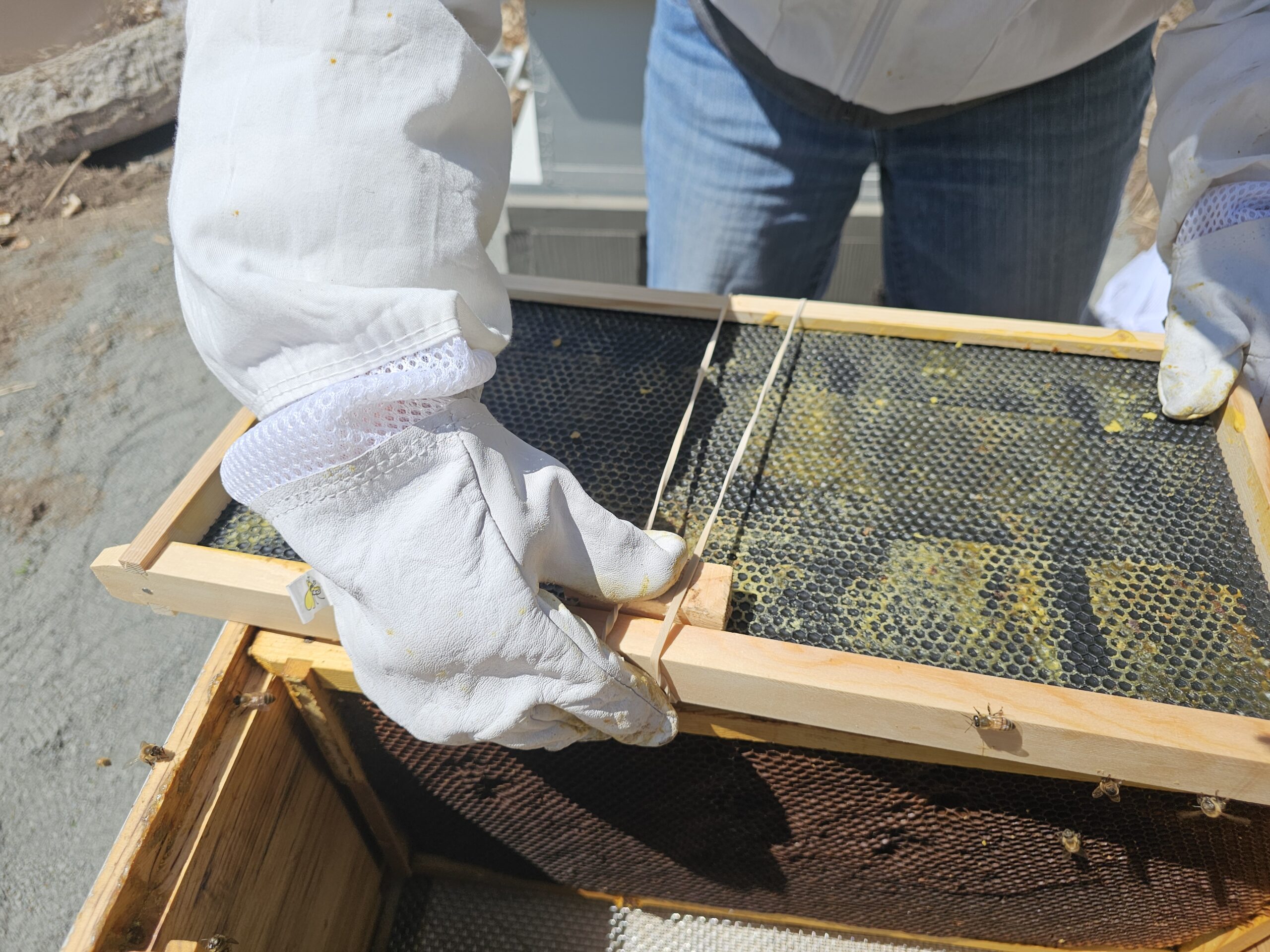
The installation of each hive were quite smooth. I began by checking on the queen and performed the velcro test (see the video below) to gauge the acceptance of her by the worker bees. I was pleased to find that both hives appeared to have welcomed her. However, I opted to keep her in her cage for a few more days for added assurance. Noticing that the queen box lacked candy, I chose to leave the cork in place and return later to free her. To ensure she stayed secure, I used a couple of rubber bands to attach her cage to a central frame at the top, allowing the worker bees to keep her warm, especially since nighttime temperatures would drop into the high 30s before her release. Additionally, I fastened the metal strap of her cage to the top of the frame, ensuring the screen side faced down so that the workers could easily access her for feeding.
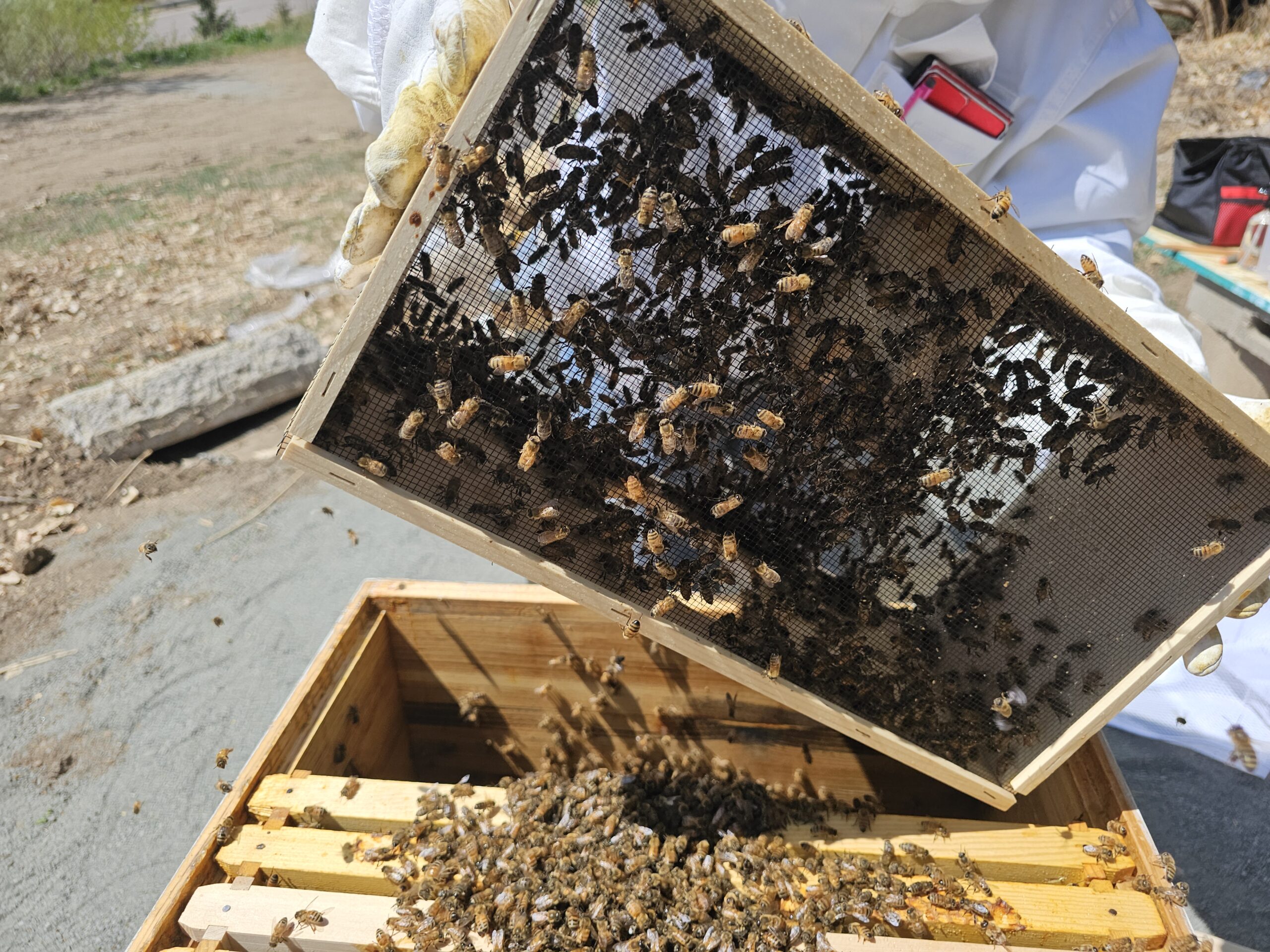
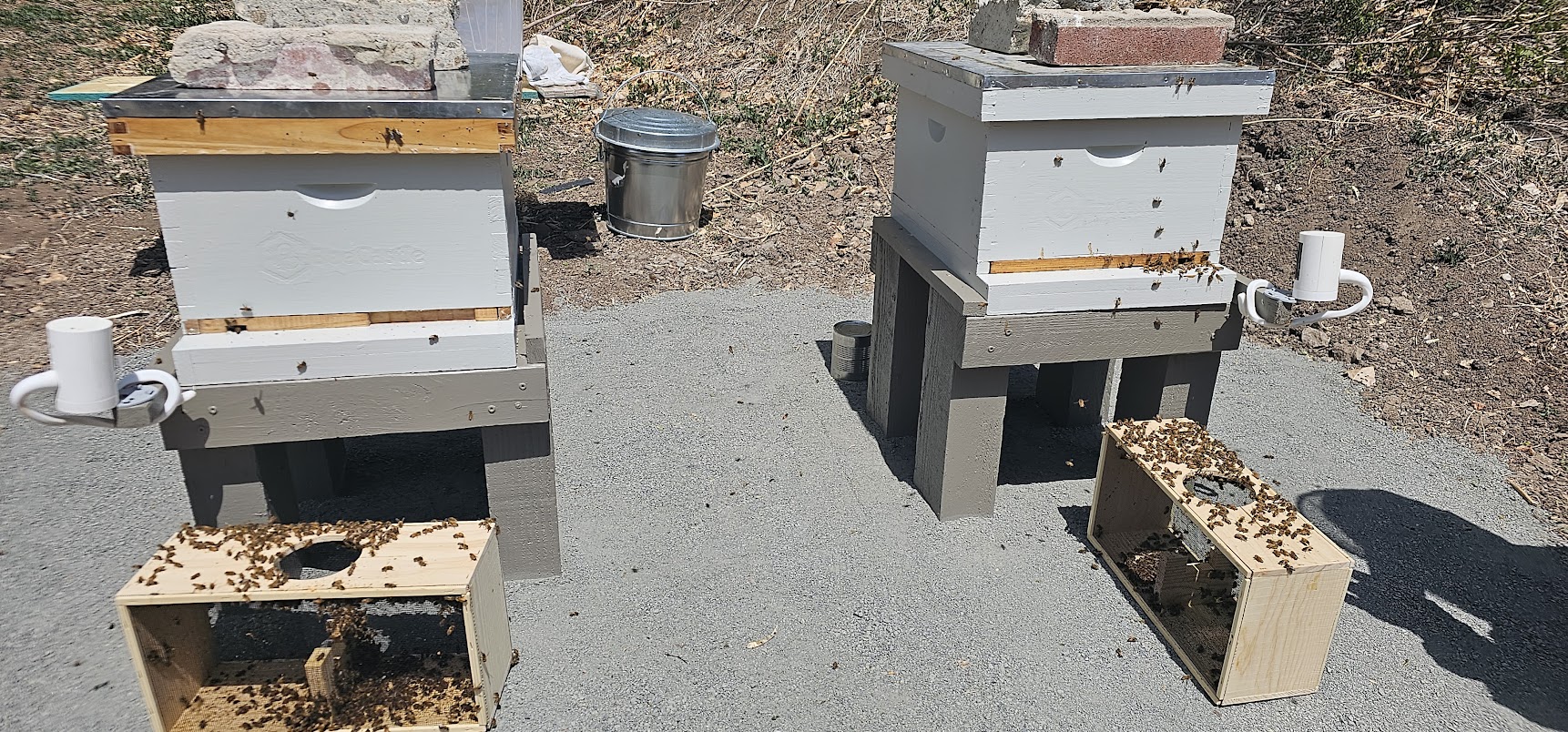
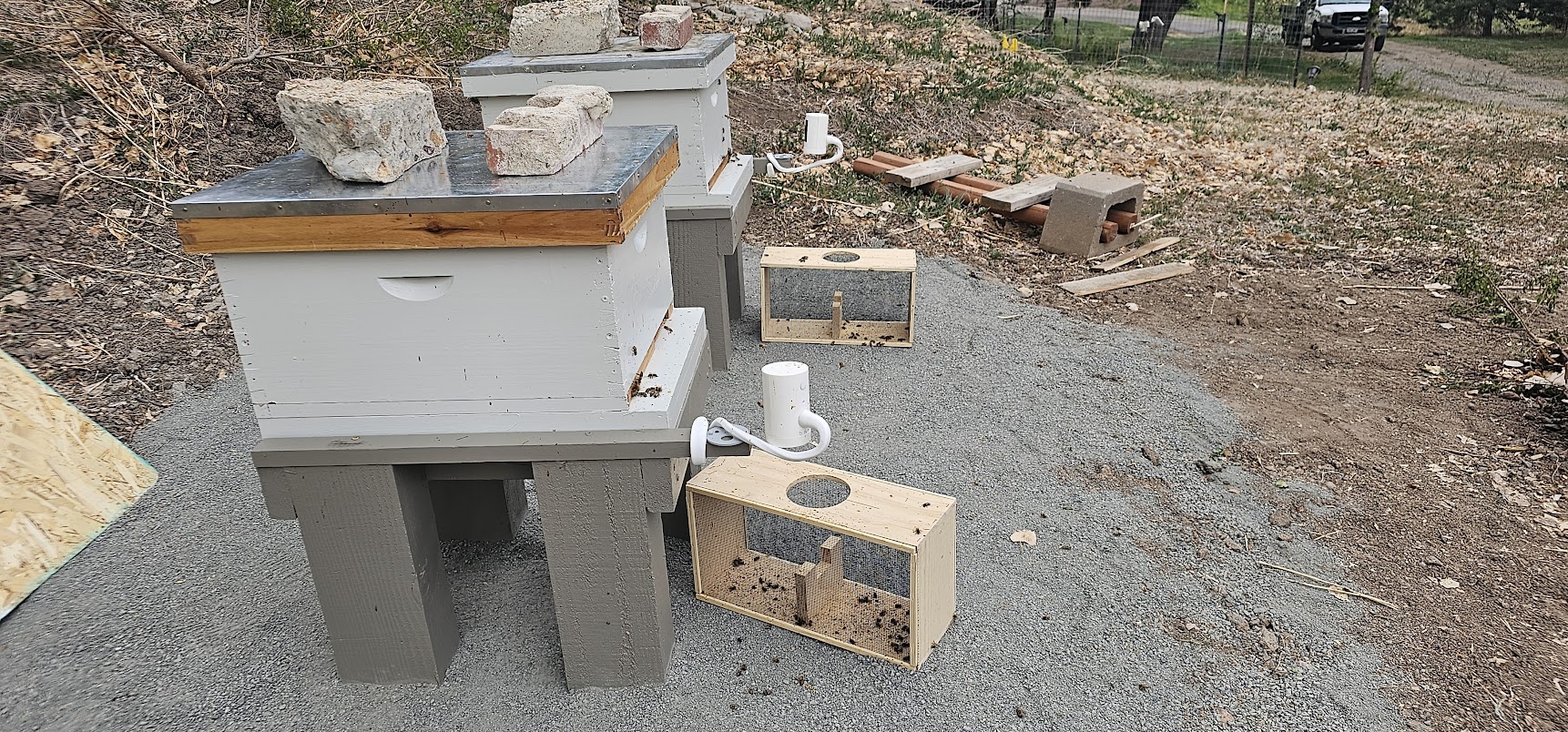
After securing the queen, I took out a few frames to create room for shaking the bees into the hive. I opted for the shaking method because I wanted to expedite their transfer instead of waiting for all the bees to exit the package box on their own. It was important to get them inside the hive before the temperatures dropped. Since not all the bees were eager to leave the box, I placed it near the front entrance, allowing the remaining bees to follow the pheromones and join their companions inside the hive.
I replaced the 10th frame with a feeding frame filled with 1:1 sugar syrup to provide nourishment during the cold weather and to aid in the completion of comb building. In each hive, I alternated by adding a frame that contained comb from last year.
After a few hours, I returned to check on the packages and noticed that all of them had entered their hives, except for those that had already perished. My next session with the bees will be to release the queen in a few days. I’ll be planning it around the weather.