Calendula

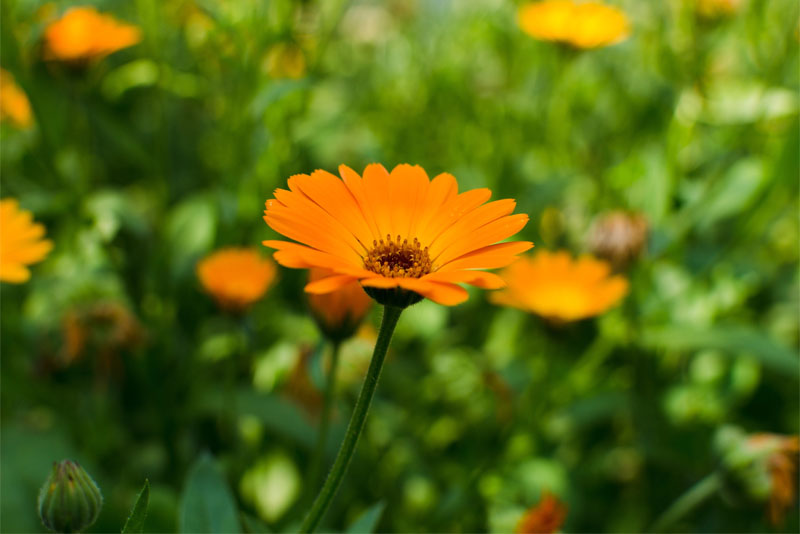
Botanical Name: Calendula officinalis
Benefits & Uses of Calendula: Anti-Inflammatory, Antimicrobial, Bites or Stings, Detox, Digestion, Skin, Women, Wounds
Parts used of Calendula: Flower Heads
Parts Best used: Dried or Fresh
Ways to Prepare Calendula: Infused Oil, Tea, Tincture
Bodycare Uses: Cream, Lip Balm, Lotion, Salve

Growing
Calendula
Plant Type:
Perennial
Sun Exposure:
Full sun or partial shade
Planting Depth:
1/2”
Planting Space:
5"
Plant Height:
15"
When To Plant:
3-4 weeks before last frost
Container Friendly
Start Seeds Indoors
Plant Maintenance: Low
Easiest To Grow From: Seed
Seeds & Companion Plants
Seeds can be saved. How To Save Seeds: Let a blossom turn into a seed pod. Cut off the pod and collect seeds from pods. Store in cool, dry place in a closed container.

Harvesting & Preserving
Pruning Tips: If the plant starts getting too lengthy, prune down the plant down to be shorter and compact. It'll help create more growth at the base to create a bushier plant.
When to Harvest: When the flowers just recently bloomed.
Harvesting Tips: To collect calendula flowers, just cut or pick the flower at the point where it connects to the stem. Doing it mid-morning is best after the morning dew has dried, but I just harvest mine when time permits.
**When foraging for wild herbs, be sure to pay attention to where you are getting it from. Be cautious about harvesting plants grown in potentially contaminated areas like roadsides, driveways, unfamiliar terrain, and areas that may have been sprayed with herbicides.
Pets & Calendula
Calendula Videos
Deadhead & Collect Calendula Seeds