Tomatillo

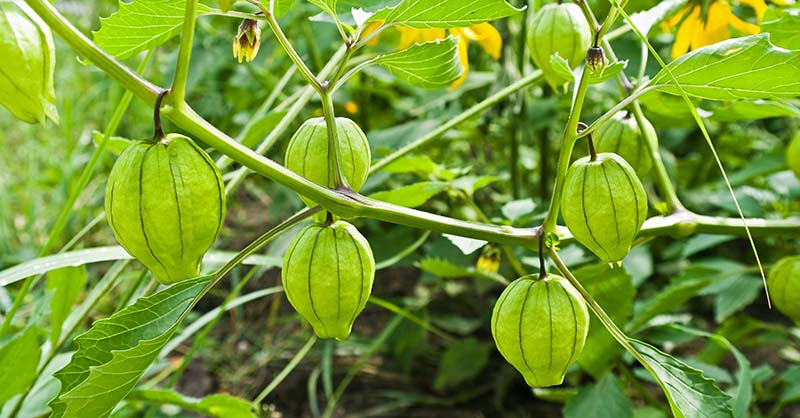
Tomatillo means “little tomato” in Spanish. Tomatillos are the odd-looking distant cousins of the beloved tomato.
Ease of Growing from Seed:
Fairly easy once seed sprouts
Plant Maintenance:
Low
Frost Hardy:
Tomatillo are Frost Susceptible (When temperatures drop below 30°F for five to ten minutes or when temps remain in the 31 to 32°F. range for several hours, it will most likely kill the plant.)
Common Pests:
Aphids, Cucumber Beetles, Potato Beetles, Tomato Hornworms
Common Problems:
Early blight, Late blight, Verticillium wilt, Fusarium wilt
Pruning Tips:
Remove any diseased or damaged leaves and keep the bottom pruned to allow air circulation.
Growing Tips:
Tomatillos are not self pollinating so they should be planted in groups of two to ensure successful pollination of the blooms.
When planting, bury two-thirds of the plant, similar to how you would with a tomato plant. Add a stake or trellis for the seedlings to climb as they grow.
Tomatillos require a long growing season, so start seeds indoors or purchase from a local nursery.
Fertilizing:
Fertilize with a continuous-release plant food regularly.
Growing
Tomatillo
Plant Type:
Annual
Sprouts in:
7-14 days
Days to Maturity:
75-100 days
Sun Exposure:
Full Sun
Plant Zone:
3-11
Ideal Temperature:
70-80℉
Soil Ph:
Between 6.0 and 7.0
Planting Depth:
1/8″ – 1/4″
Planting Space:
18-24"
Plant Height:
5'
When To Plant:
6 – 8 weeks before the last frost
Bee Pollinator
Container Friendly
Start Seeds Indoors
Deer Resistant
Plant Maintenance: Low
Seeds & Companion Plants

Ease of Growing from Seed: Fairly easy once seed sprouts
Seeds can be saved. How To Save Seeds: Here's a great article on how to save seeds by Cottage Farmstead
Planting Veggie Companions:
Asparagus
Carrots
Garlic
Onions
Peas
Jalapenos
Planting Herb Companions:
Basil
Parsley
Other Planting Companions: Marigolds, Mint, Nasturtiums, Peppers
Bad Planting Companions: Corn, Brassicas, Dill, Fennel, Potatoes
More Detail on Companions:
Asparagus: will help deter root-knot nematodes
Basil: can help repel hornworms and other pests with its strong scent
Carrots: can help keep the soil aerated by breaking it up
Garlic: is a great deterrent for aphids
Marigolds: attract pollinators and help keep nematodes away
Mint: will absolutely help with aphids, as well as cabbage moths and even ants
Nasturtiums: help keep whiteflies and cucumber beetles away
Onions: can help keep the beetles away with their smell
Parsley: attracts hoverflies and their larva will eat aphids
Peas: add nitrogen to the soil
Peppers: help prevent root rot for your tomatillos
Tomatoes: require the same types of soil and nutrients

Harvesting & Preserving
Pruning Tips: Remove any diseased or damaged leaves and keep the bottom pruned to allow air circulation.
When to Harvest: Harvest tomatillos when they turn green in color and have filled out the husk. If they are left to ripen too long, they will can split the husk and turn yellow or purple. These are not as good for cooking.
You can store on the counter top for about a week or in the fridge for a couple of weeks. Keep them in their husk until you're ready to use. Wash before using.
Harvesting Tips: You know that Tomatillos are ready to harvest when you squeeze them and they've filled out their husk and/or they have split them. They will be about the size of a golf ball. They should easy pull from the plant when they are ready. They will be firm unlike the tomato. Keep tomatillos in their husks for 2 to 3 weeks inside a paper bag in the vegetable compartment of the fridge. To freeze tomatillos, remove the husk, wash and dry the fruit, and then store them whole in freezer bags. Using two bags is recommended to avoid freezer burn.
**When foraging for wild herbs, be sure to pay attention to where you are getting it from. Be cautious about harvesting plants grown in potentially contaminated areas like roadsides, driveways, unfamiliar terrain, and areas that may have been sprayed with herbicides.
Ways of Preserving Tomatillo:
Freezing, Pressure Canning, Water Bath Canning
Pets & Tomatillo
If ingested: It is unknown if it's toxic to dogs
Tomatillo Videos
How & When to Harvest, Storage Tips, Salsa Verde Recipe!
3 DIY Tomato Trellis Ideas
5 Tomatillo Growing Mistakes to Avoid
How to Grow Your Own Salsa