Mullein

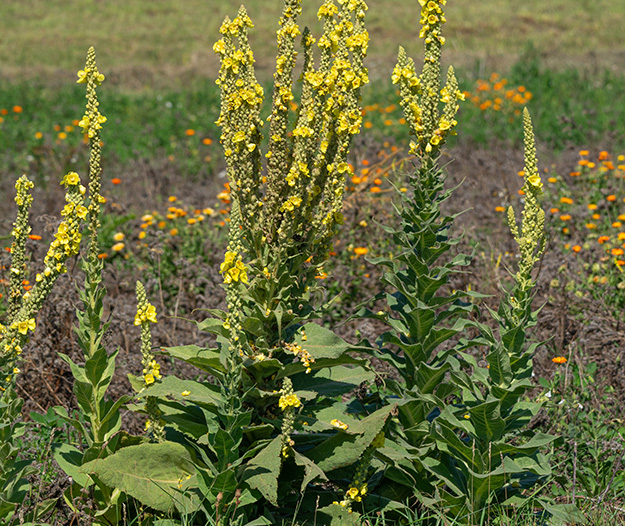
Botanical Name: Verbascum densiflorum
Benefits & Uses of Mullein: Allergy, Asthma, Congestion, Cough, Ear Ache, Lungs, Respiratory
Parts used of Mullein: Flower Heads, Roots, Leaves
Parts Best used: Dried or Fresh
Ways to Prepare Mullein: Infused Oil, Infusion, Poultice, Syrup, Tea, Tincture
Bodycare Uses: Salve
Culinary Uses: Nothing that I'm aware of

Growing
Mullein
Plant Type:
Biennial
Sprouts in:
14-21 days
Sun Exposure:
Full Sun
Plant Zone:
4-8
Ideal Temperature:
70-80°F
Soil Ph:
Alkaline
Planting Depth:
Surface Sow
Planting Space:
18-24"
Plant Height:
2-7'
When To Plant:
6-8 weeks before last frost
Bee Pollinator
Container Friendly
Start Seeds Indoors
Deer Resistant
Pest Repellant
Plant Maintenance: Low
Drought Tolerant
Frost Hardy: Mullein are Freeze Tolerant (Vegetables that can endure freezing temperatures between 26°F and 28°F. They are the champions of cold resilience.)
When to plant outdoors: Once danger of frost has passed
Easiest To Grow From: Seed
Common Pests: Mullein is generally resilient against major pests. In warmer regions, spider mites can pose a threat to the plants, and caterpillars might be seen consuming the foliage.
Common Problems: Generally resilient against diseases, although they may occasionally be affected by powdery mildew and fungal leaf spot or root rot.
Growing Tips: It is best to plant mullein seeds directly into the soil as the plant develops a deep taproot and prefers minimal disturbance once established in a specific location.
Fertilizing: Feed with a slow release 10-10-10 fertilizer.
Seeds & Companion Plants
Ease of Growing from Seed: Fairly easy once seed sprouts
Seeds can be saved. How To Save Seeds: The flower stalk will grow in the second year. Let the flower stalk turn brown and dry before saving the tiny seeds. Here's a great video by Humble Servants Homestead
Planting Herb Companions:
Dill
Basil
Dandelion
Yarrow
Echinacea

Harvesting & Preserving
Pruning Tips: During the summer season, Mullein can bloom continuously for approximately six weeks. To maintain the blooming cycle, deadhead the faded flowers.
When to Harvest: Harvest the roots in the initial autumn or subsequent spring. Leaves can be manually removed at any point in the growing season. Collect flowers when they are fully bloomed, and trim the top 3-6 inches of the flower stalk.
Harvesting Tips: Check your mullein every day or two while they are in bloom, as only a small number of flowers bloom on the stalk each day. Leave some flowers for the bees, as well as to ensure that the plants can reseed for the following year! Select the most vibrant and best looking leaves, discarding any that show signs of yellowing, browning, or drying out. Take the time to carefully inspect and discard any bugs before bringing them in your house.
**When foraging for wild herbs, be sure to pay attention to where you are getting it from. Be cautious about harvesting plants grown in potentially contaminated areas like roadsides, driveways, unfamiliar terrain, and areas that may have been sprayed with herbicides.
Pets & Mullein
If ingested: It should be safe for dogs, but best to check with your vet or professional for safe dosage
How Mullein can be used for pets: Here's a great article on using mullein with dogs on Your Old Dog
**Before administering any supplements to your dog, you should seek advice from a veterinarian**
Mullein Videos
MULLEIN: The BEST Lung Supporting and Strengthening Herb
Respiratory Health Benefits + How to Make Mullein Tea
Why Harvest Mullein, When to Harvest Mullein, and How to ID
Mullein Harvesting, Processing, & Medicinal Recipes