Elecampane

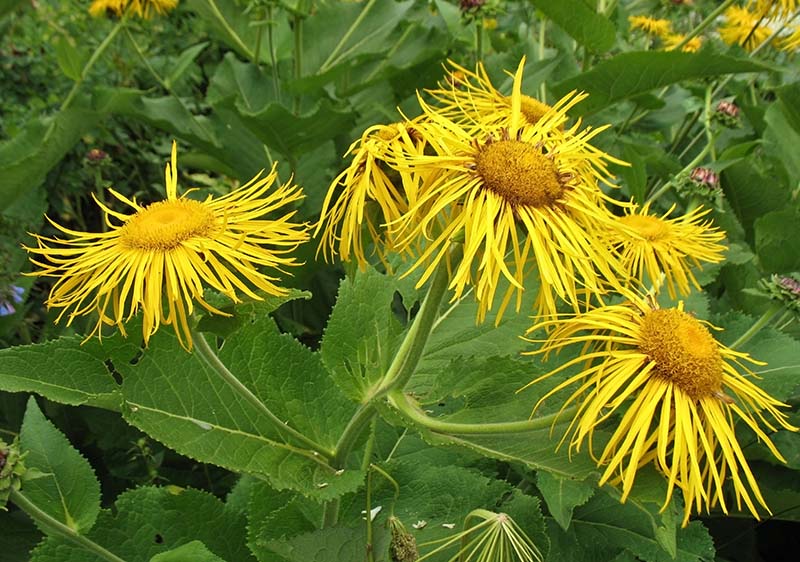
Botanical Name: Inula helenium
Benefits & Uses of Elecampane: Antimicrobial, Asthma, Cough, Digestion, Lungs
Parts used of Elecampane: Roots
Parts Best used: Dried or Fresh
Ways to Prepare Elecampane: Decoction, Syrup, Tea, Tincture
Culinary Uses: When opting to utilize elecampane for medicinal purposes, it is commonly made into a tea, tincture, or even candy form.

Growing
Elecampane
Plant Type:
Perennial
Sprouts in:
12-30 Days
Days to Maturity:
120 days
Sun Exposure:
Full Sun to Partial Shade
Plant Zone:
4-9
Ideal Temperature:
65-90°F
Soil Ph:
Between 6.0 and 7.0
Planting Depth:
Surface Sow
Planting Space:
24"
Plant Height:
7'
When To Plant:
6-8 weeks before the last frost
Bee Pollinator
Container Friendly
Start Seeds Indoors
Deer Resistant
Plant Maintenance: Low
Frost Hardy: Elecampane are Freeze Tolerant (Vegetables that can endure freezing temperatures between 26°F and 28°F. They are the champions of cold resilience.)
When to plant outdoors: Transplant seedlings outdoors when they have 2-3 sets of leaves
Easiest To Grow From: Seed
Common Pests: Elecampane is not significantly affected by any major pests or diseases.
Growing Tips: To prevent the plant from growing too tall, it is advisable to either stake it or prune it regularly.
Fertilizing: No fertilizer needed.
Seeds & Companion Plants
Ease of Growing from Seed: Easy
Seeds can be saved. How To Save Seeds: Allow the flower to completely mature and dry on the plant, then clip off the flowerheads. Gently crush the flowerheads in your hands over the container to separate them.
Planting Veggie Companions:
Tomatoes
Potatoes
Planting Herb Companions:
Echinacea
Goldenrod
Bad Planting Companions: Fennel, Dill
More Detail on Companions:
- Tomatoes: Elecampane can help repel nematodes
- Potatoes: Elecampane can help deter potato beetles and other pests

Harvesting & Preserving
Pruning Tips: Deadhead spent flowers to encourage more blooms and prevent self-seeding.
When to Harvest: Harvest Elecampane roots in the fall of the second year’s growth or in early spring of the next year.
Harvesting Tips: The roots of elecampane spread out horizontally from the plant's base, making them simple to gather from the damp soil in which they thrive. It's important to ensure that each root you collect is connected to its respective plant, as nearby tree roots or other root systems can easily become intertwined with the elecampane roots you’re trying to harvest. The roots must be cleaned, peeled, and diced.
**When foraging for wild herbs, be sure to pay attention to where you are getting it from. Be cautious about harvesting plants grown in potentially contaminated areas like roadsides, driveways, unfamiliar terrain, and areas that may have been sprayed with herbicides.
Pets & Elecampane
**Before administering any supplements to your dog, you should seek advice from a veterinarian**
Elecampane Videos
Growing, Harvesting, and Preparing
Saving Elecampane Seeds
Replanting Root Crowns
Elecampane: Medicine Making
Benefits of Elecampane Plant