Chicory

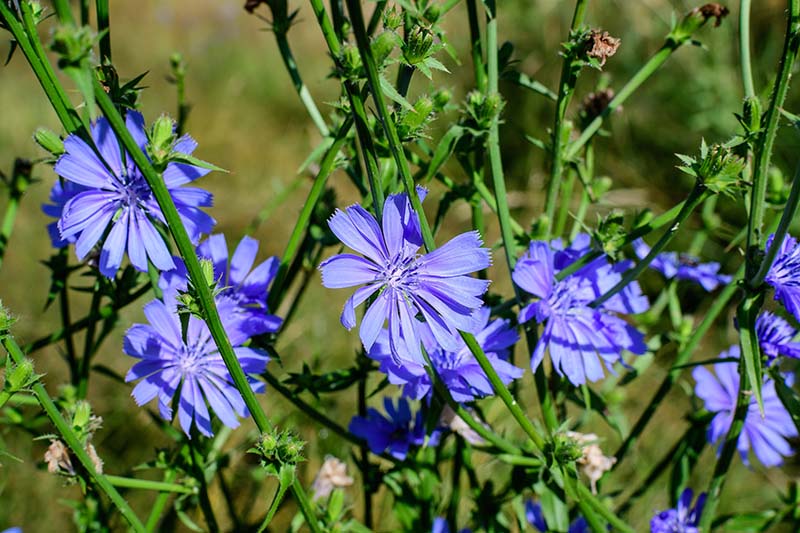
Botanical Name: Cichorium intybus
Chicory is a member of the dandelion family. It has lengthy roots and a cluster of leaves at the base. It grows a sturdy stem that reaches a height of 2 to 5 feet. Its blooming period occurs from July to October. In the morning, the flowers bloom and after approximately five hours, they close. This timing aligns with the peak activity of bees, which are responsible for pollinating them. On days with overcast skies, the flowers might remain open for an extended period or throughout the entire day.
Benefits & Uses of Chicory: Anti-Inflammatory, Blood Pressure, Digestion, Diuretic, Fever, Heart, Immune, Liver, Urinary, Wounds
Parts used of Chicory: Flower Heads, Roots, Leaves
Parts Best used: Dried or Fresh
Ways to Prepare Chicory: Decoction, Infusion, Poultice, Tea, Tincture
Culinary Uses: Young chicory roots are used in soups and sauces or as a roast vegetable. Typically, the roots are roasted until they become brittle and brown, then ground and brewed similar to coffee. When prepared in this manner, the roots have a coffee-like flavor but do not contain caffeine.

Growing
Chicory
Plant Type:
Perennial
Sprouts in:
1 to 3 weeks
Days to Maturity:
75 to 85 days
Sun Exposure:
6 hours of sunlight per day. In warmer climates, put potted plants in an area that receives shade during the afternoon.
Plant Zone:
3 - 8
Ideal Temperature:
Below 75°F
Planting Depth:
Surface sow
Planting Space:
6-10"
Plant Height:
2-5'
When To Plant:
5 to 6 weeks before your last frost
Bee Pollinator
Container Friendly
Start Seeds Indoors
Deer Resistant
Plant Maintenance: Low
Frost Hardy: Chicory are Freeze Tolerant (Vegetables that can endure freezing temperatures between 26°F and 28°F. They are the champions of cold resilience.)
Easiest To Grow From: Either Seed or Plant
Growing Tips: Use a deep container if you plan to grow chicory for the roots. Selecting a location that receives abundant sunlight is essential for cultivating chicory roots, while opting for partial sun is more suitable for those intending to harvest the leaves.
Fertilizing: Fertilize with ¼ cup of nitrogen based fertilizer such as a 21-0-0 per approximately four weeks after transplanted. Excessive fertilizer can actually weaken the plant and cause it to become limp. Adding a small amount of compost to the soil during planting is typically all that's needed. If it appears to be in need of assistance, consider applying a diluted water-soluble or fish fertilizer at half concentration to boost its growth.
Seeds & Companion Plants
Ease of Growing from Seed: Fairly easy once seed sprouts
Planting Veggie Companions:
Carrots
Beets
Cucumbers
Lettuce
Planting Herb Companions:
Dill
Sage
Other Planting Companions: Cauliflower
Bad Planting Companions: Peas, Beans
More Detail on Companions:
- To combat aphids, plant dill nearby. Ladybugs and lacewings are attracted to dill and will gather there, staying to feast on the aphids in your garden.
- Cauliflower is a good companion because it has similar growing requirements.
- Beets & Carrots are great at loosening up the soil and will help make it easier for the roots to grow.

Harvesting & Preserving
When to Harvest: Harvest the plant after around three months after planted. Harvest chicory leaves once the plant reaches a height of 12 to 18 inches.
Harvesting Tips: For chicory leaves, carefully trim them near the base when they are young and tender, typically around 6 to 8 inches in length. Trim the plant at ground level, ensuring the root remains intact, or alternatively uproot the entire plant and then remove the root. Harvest the roots in late summer. To effectively gather the roots for a coffee alternative, it is best to use a shovel instead of hand pulling the plant. By using a shovel, you can ensure that you extract the entire root, as opposed to only partially removing it by hand. To prepare chicory roots for roasting, first clean off the soil by scrubbing them with a brush. Next, either shred the roots with a peeler or cut them into small pieces for more even roasting. Arrange the pieces in a single layer on a baking sheet lined with parchment paper to prevent any reaction with metal that could alter the flavor. Roast the roots in a 350 F oven for 90 minutes until they are crispy and brown. Afterwards, store the roasted roots like coffee beans and grind them when you're ready to use.
**When foraging for wild herbs, be sure to pay attention to where you are getting it from. Be cautious about harvesting plants grown in potentially contaminated areas like roadsides, driveways, unfamiliar terrain, and areas that may have been sprayed with herbicides.
Pets & Chicory
**Before administering any supplements to your dog, you should seek advice from a veterinarian**
Chicory Videos
How to Identify, harvest, process, and roast
Edible leaves, flowers, and root. Dig, chop, roast, grind the root like coffee!
How to Plant, Grow, and Harvest Chicory From Seed
How to Roast and Grind Chicory
Roasting Chicory For Coffee